
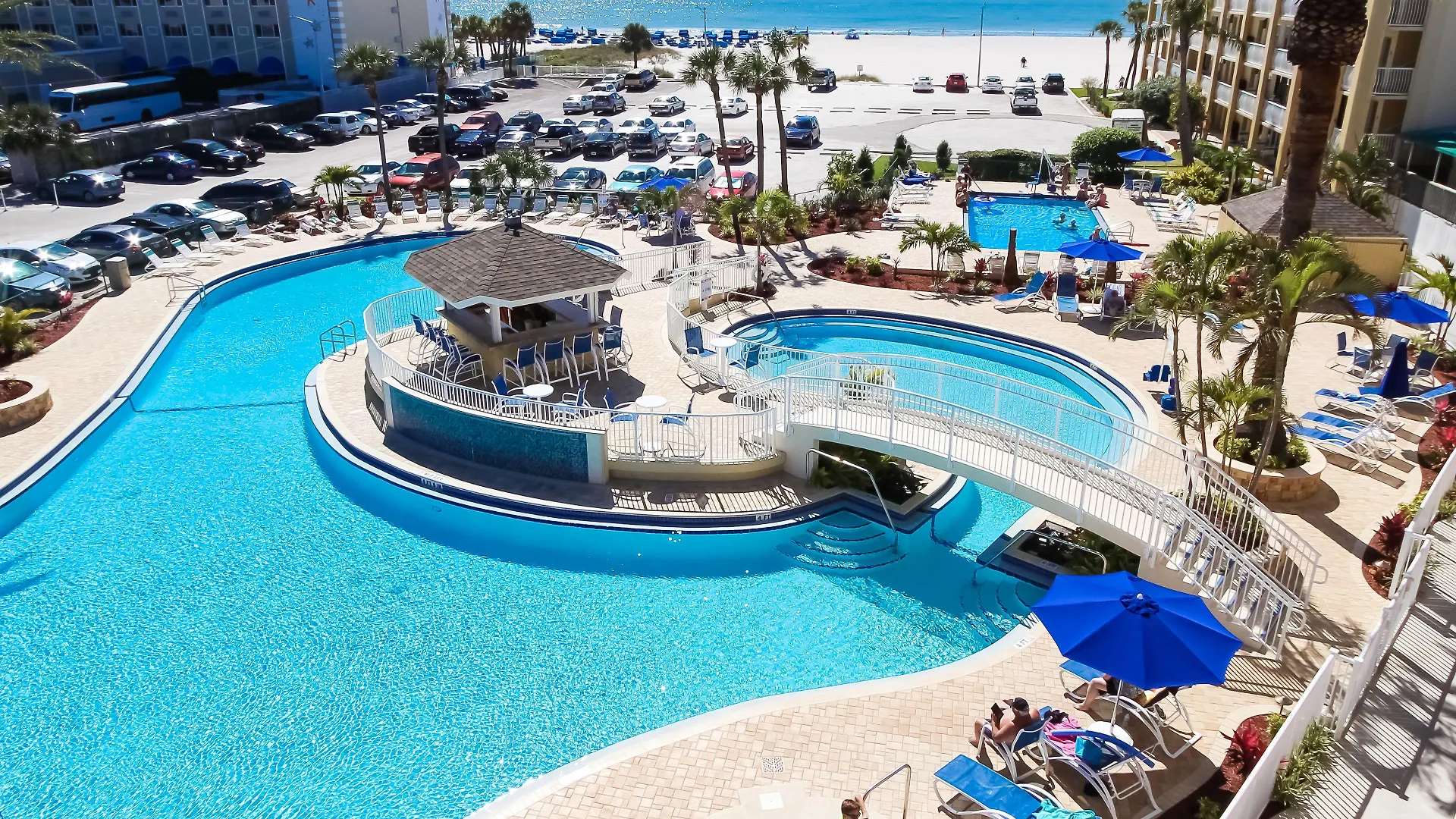
St Pete Beach - Long Key sits on a barrier island along Florida's Gulf Coast, where Gulf Boulevard runs as the main artery connecting resorts, beach access points, and local dining. Travelers searching for central hotels here are typically weighing direct beach access against price, and trying to figure out which stretch of the island puts them closest to both the water and practical amenities without needing a car for every meal or activity.
What It's Like Staying In St Pete Beach - Long Key
Long Key is the southern section of St Pete Beach, anchored by Gulf Boulevard and flanked by the Gulf of Mexico to the west and Boca Ciega Bay to the east. Most hotel guests can reach the sand in under 5 minutes on foot from any centrally positioned property, which makes car dependency genuinely low once you've checked in. The strip sees heavy foot traffic during spring break and summer weekends, but outside those peaks, the pace is noticeably calmer than Clearwater Beach to the north.
Staying here works well if your trip revolves around beach time, water sports, and Gulf-side dining. Travelers who prioritize urban nightlife or cultural density may find the options limited without driving into downtown St. Petersburg, which sits around 16 km east.
Pros:
- Walkable beach access from nearly every central property, typically under a 5-minute walk
- Gulf Boulevard provides a connected corridor to restaurants, shops, and boat charter docks without needing a car
- Quieter atmosphere compared to Clearwater Beach, making it easier to find beach space and parking
Cons:
- Limited late-night dining and entertainment within walking distance after 10pm
- No walkable public transit to downtown St. Petersburg - a car or rideshare is necessary for city-side attractions
- Peak season (March-August) brings heavy weekend crowds that fill hotel pools and popular beach stretches fast
Why Choose Central Hotels In St Pete Beach - Long Key
Central hotels along Long Key's Gulf Boulevard corridor offer something that hotels a few miles inland simply can't replicate: the ability to go from bed to beach without logistics. Properties positioned within 200 metres of the Gulf shoreline command a notable price premium, but they also eliminate the need for beach shuttle services or paid parking, which adds up quickly on a week-long trip. Room sizes in this category tend to run larger than comparable coastal markets - many units include full kitchens, separate living areas, and private balconies, which shifts the value calculation significantly for stays longer than two nights.
The main trade-off is noise: Gulf Boulevard carries steady traffic, and properties facing the road rather than the water will experience ambient street noise, particularly on Friday and Saturday evenings. Beachfront-facing rooms typically cost around 25% more than road-facing units at the same property, but the direct Gulf views and reduced noise exposure justify the difference for most guests.
Pros:
- Many central properties include full kitchens, cutting meal costs significantly on multi-night stays
- Beachfront positioning eliminates parking and shuttle fees that pile up at inland alternatives
- Outdoor pools with Gulf views are a standard feature at mid-range and above properties in this corridor
Cons:
- Gulf Boulevard-facing rooms at busy properties see consistent road noise on weekends
- Beachfront premium adds around 25% to nightly rates versus road-side rooms at the same hotel
- During peak season, on-site amenities like pools and beach chairs fill up early - often before 10am
Practical Booking & Area Strategy
The most strategically positioned stretch for central hotels is the Gulf Boulevard corridor between 46th Avenue and Pass-A-Grille Way, which keeps you within walking range of Sunset Beach, Upham Beach, and multiple waterfront dining spots. Sunset Beach and Upham Beach are both reachable on foot in under 20 minutes from properties in this zone, removing any need for daily car use if your itinerary stays beach-focused. For day trips, Fort De Soto Park is a 16-minute drive south, The Dalí Museum in downtown St. Petersburg is around 17 km east, and Johns Pass Village Boardwalk - a popular stop for dolphin tours and seafood - sits roughly 9 km north.
St. Pete-Clearwater International Airport is approximately 26-30 km away, making rideshare the practical arrival option. Book at least 8 weeks ahead for any travel between March and Labor Day - beachfront units at the well-reviewed central properties sell out at that tier well before peak dates arrive, and last-minute availability in this corridor skews heavily toward road-facing or standard rooms.
Best Value Stays
These properties deliver direct beach access and core amenities at price points that make multi-night stays practical, without sacrificing proximity to the Gulf.
-
1. Coral Reef Resort
Show on map


 Check-infrom 16:00 until 23:59Check-outuntil 10:00
Just a few rooms left at the best rate!
fromUS$ 243
-
2. Blind Pass Resort Motel
Show on map


 Check-infrom 15:00 until 22:00Check-outfrom 05:00 until 11:00
Just a few rooms left at the best rate!
fromUS$ 79
-
3. St. Pete Beach Suites
Show on map


 Check-infrom 16:00 until 21:00Check-outfrom 09:00 until 11:00
Just a few rooms left at the best rate!
fromUS$ 185
-
4. Gulf Strand Resort By Travel Resort Services
Show on map


 Check-infrom 15:00 until 17:00Check-outuntil 10:00
Hurry – almost gone at this price!
fromUS$ 426
Best Premium Stays
These properties operate at a higher price point and deliver resort-scale amenities, landmark status, or exceptional on-site programming that separates them from standard Gulf Boulevard options.
-
5. Island Grand At Tradewinds
Show on map


 Check-infrom 16:00 until 23:59Check-outuntil 11:00
Hurry – almost gone at this price!
fromUS$ 199
-
6. The Don Cesar
Show on map


 Check-infrom 16:00 until 23:59Check-outuntil 11:00
Rooms filling fast – secure the best rate!
fromUS$ 226
-
7. Bellwether Beach Resort
Show on map


 Check-infrom 16:00 until 23:59Check-outuntil 11:00
Rooms filling fast – secure the best rate!
fromUS$ 120
Smart Travel & Timing Advice for St Pete Beach - Long Key
The Gulf Coast climate in St Pete Beach means the area is technically bookable year-round, but timing your stay strategically changes both the cost and the experience significantly. March through early May is the most competitive booking window - spring break traffic from the Southeast and Midwest fills beachfront properties weeks in advance, and prices spike across all tiers. Summer (June-August) brings high humidity and afternoon thunderstorms nearly daily, but the water is warm, crowds thin slightly mid-week, and last-minute deals occasionally surface at non-beachfront properties when storm forecasts scare off casual visitors.
The quietest and most cost-effective window runs from mid-September through November, when water temperatures remain comfortable for swimming, beach crowds drop noticeably, and central hotel rates can run around 30% lower than peak summer pricing. A minimum stay of 3 nights makes the most sense logistically given the island's layout - one full day typically goes to arrival and orientation, and the area rewards slower exploration by bike and on foot rather than rushed day-trip schedules. For the premium beachfront properties like The Don CeSar and Island Grand at TradeWinds, booking 8 weeks ahead for any summer or holiday weekend travel is not optional - it's the difference between a Gulf-view room and no availability at all.


